Water Conservation and Reuse Efforts
Efforts to Conserve Water
To reduce water consumption and increase reuse, DX Division has expanded the installation of water-saving facilities in every business site and additionally discovered reuse opportunities for applying reclaimed water after wastewater treatment. In addition, DX Division is carrying out various activities such as using groundwater and rainwater for landscaping and household use.
DS Division strives to protect water resources by reducing water usage, promoting water reuse, and recycling wastewater. Through various efforts including the Jangheung Dam wetland* restoration initiative, we are working to replenish the water resources that we used.
- * Expected to secure restored water volume starting in 2025
-

Reducing water usage
[DX Division]
- Minimized discharge for freeze prevention during winter by insulating cooling towers, thereby reducing makeup water use
[DS Division]
- Optimized equipment cleaning processes
- Optimized cleaning intervals through data-driven deep learning analysis
- Improved processes and maximized water use efficiency of equipment
- Reduced water usage by approximately 16.76 million tonnes in 2024 at business sites in South Korea
-
Promoting water reuse
[DX Division]
- Wastewater reuse: Reused 2.74 million tonnes of water for various purposes including equipment cleaning within production processes, landscaping, and road spraying
[DS Division]
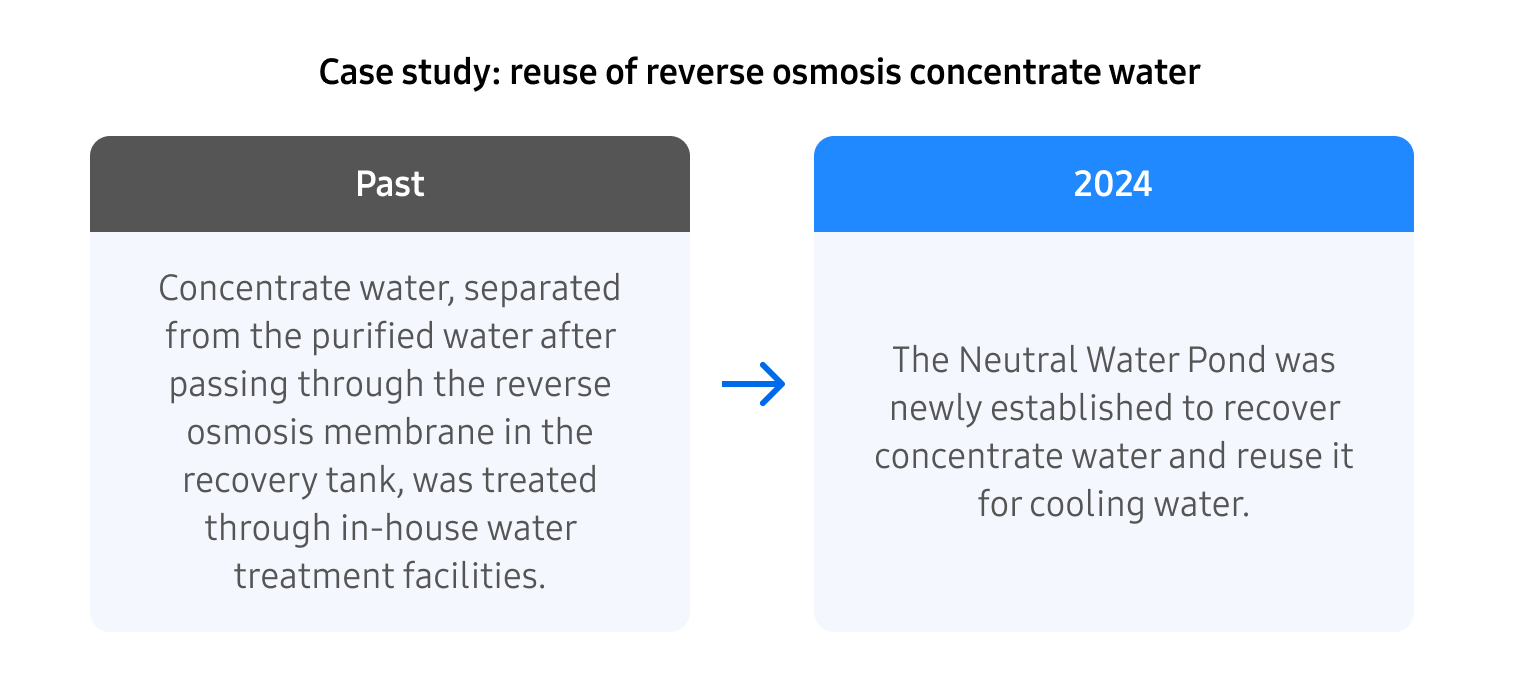
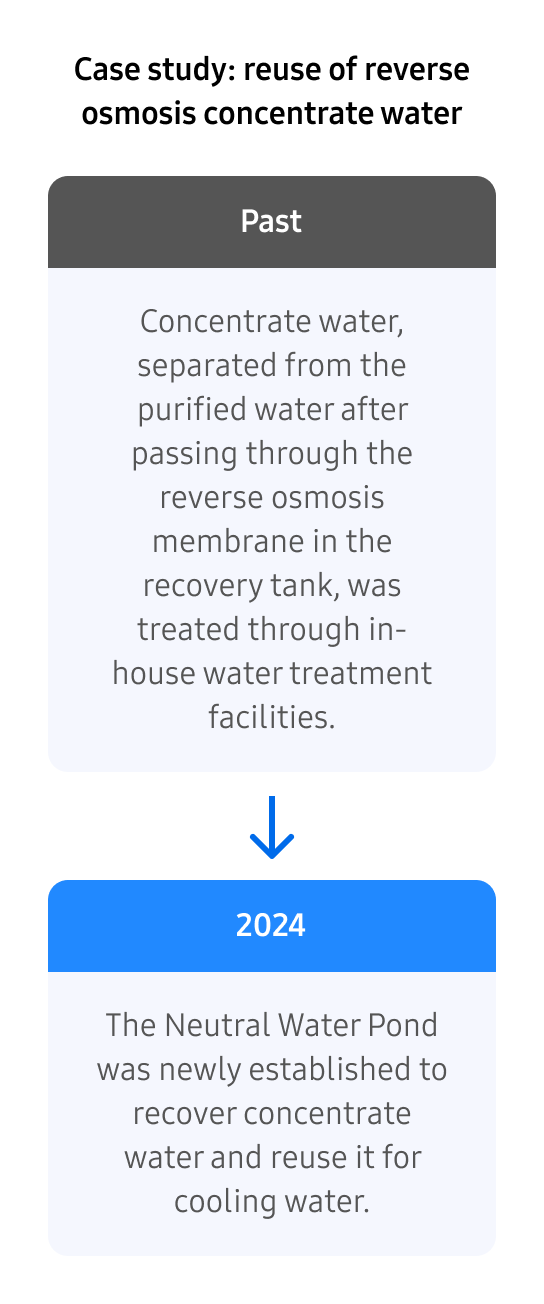
- Reuse of wastewater generated in production facilities, either directly or after purification through in-house treatment facilities
- - Maximized water reuse rates through wastewater source analysis
- - Reused approximately 101 million tonnes of water in 2024 and set a reuse target of approximately 109 million tonnes for 2025
-
Introduction of treated sewage water reuse
[DX Division]
- Reduction in water supply at the Mexico subsidiary: Replaced landscaping water with treated discharge water from a public wastewater treatment plant
[DS Division]
- Signed an MOU for the 'Gyeonggido Region Semiconductor Site Reclaimed Water Project (Phase 1)'
- - Signed in December 2024 in collaboration with the Ministry of Environment and Gyeonggi Province
- - Planning to reuse approximately 120,000 tonnes per day of treated wastewater from the cities of Hwaseong and Osan as industrial water at the Giheung·Hwaseong sites by 2029, after conducting feasibility assessments and constructing necessary facilities
-
Total amount of reused water in 2024
125.46 million tonnes*
* DX∙DS Divisions combined
-
-
Reduction in Water Usage
-
- Optimize operations of the business site
- Replace existing equipment with high-efficiency alternatives
- Improve processes for ultrapure water usage
- Expand the installation of water-saving facilities (sinks/toilets, etc.) at all business sites
-
-
-
Increase in Water Reuse
-
- Reuse wastewater from production processes
- Reuse externally treated sewage water
- Separate wastewater from reusable water sources
- Explore additional gray water reuse applications, including landscaping, residential use, and road spraying
-