Conserving Biodiversity in DS Division
At DS Division, we recognize the benefits provided by natural capital, such as water and food supply, climate regulation, pollution purification, and disaster prevention, and the importance of the biodiversity that serves as its foundation. We strive to prevent environmental degradation and biodiversity loss. In accordance with the Samsung Electronics Biodiversity Conservation Principles, we participate in various activities to mitigate the impacts and risks our business activities pose to natural capital, even amid the continuous expansion of our production facilities and output.
Biodiversity Risk Management
We have introduced the TNFD1)-recommended LEAP2) process to analyze and evaluate natural capital risks. We establish targeted mitigation strategies to manage the risks identified through this process.
- The Taskforce on Nature-related Financial Disclosures (TNFD) provides natural capital disclosure standards.
- LEAP is a process-based methodology for Locating a company's interfaces with nature, Evaluating dependencies and impacts, Assessing risks and opportunities, and Preparing to respond and disclose.
Locate: Identifying spatial interfaces with nature
We surveyed and identified the ecosystems within a 15 km radius of our business sites within and outside South Korea using global datasets, including the World Database on Protected Areas (WDPA), Key Biodiversity Areas (KBA), and the IUCN Red List. Additionally, we conducted our company-led field surveys at five semiconductor sites in South Korea (Giheung, Hwaseong, Pyeongtaek, Cheonan, and Onyang) to assess ecosystem health and identify the presence of endangered species and ecosystem-disturbing species within a 5 km radius (a total area of 2,010 km²). We began our first discharge stream ecosystem survey in 2006 with the Giheung site. Starting in 2023, we have been conducting this monitoring annually across all sites in South Korea.
According to our survey results, for all our sites in South Korea, the WDPA areas account for over 5% of the sites' surrounding areas, which is slightly higher compared to our overseas sites. KBA designation was limited exclusively to the Asan Bay area near the Pyeongtaek site. Regarding biodiversity, 10 or fewer IUCN Red List endangered species were identified at the Giheung, Hwaseong, and SAS sites, while 10 or more species were recorded at all other sites. The Onyang site area showed a high proportion of mountainous terrain and high-integrity ecosystems. Meanwhile, the Pyeongtaek site area hosted four endangered species, showing the most diverse observations among our sites within South Korea. Furthermore, at least six ecosystem-disturbing species, mostly plants, were identified in the vicinity of all our sites in South Korea.
Evaluate: Assess nature-associated dependencies and impacts
We integrated TNFD-recommended global analytical tools, ENCORE1) and the SBTN Materiality Screening Tool2), to systematically determine the dependencies and impacts of our semiconductor manufacturing operations on specific natural capital.
The assessment revealed that the semiconductor industry, including DS Division, universally exhibits high dependency on natural capital related to water resources, specifically surface water and groundwater provisioning, as well as water and air quality regulation. The industry's impacts on natural capital were identified as pollutants discharged into water and soil, solid waste generated during production processes, and noise and vibration from facility operations.
- Exploring Natural Capital Opportunities, Risks and Exposure is a tool developed by the United Nations Environment Programme (UNEP) to evaluate the potential dependencies and impacts of a specific industry on natural capital.
- Science Based Targets Network (SBTN) provides this tool to quantitatively evaluate the primary factors of corporate activities impacting natural capital and biodiversity by comprehensively analyzing variables such as severity and frequency.
Assess: Calculate integrated risk
We applied a TNFD-recommended global analytical tool, the WWF Biodiversity RFS1), to identify and evaluate natural capital risks associated with our semiconductor manufacturing operations. According to the analysis results, risks related to water supply and pollutants were universally high across all business sites. Meanwhile, natural disaster risks, such as typhoons and heatwaves, were relatively higher at our sites within South Korea and SAS in the U.S. To derive the final risks, we integrated the WWF-RFS results with the dependencies and impacts assessments, our sites' locational characteristics, and insights from our personnel and ecological experts. The primary natural capital risks derived are water supply instability, pollution across water, air, and solid waste, as well as natural disasters. The characteristics and management of each risk are presented in the DIRO Table2). We are committed to further refining our natural capital risk assessment framework through quantitative materiality assessments and expanded supply chain analysis.
- WWF Biodiversity Risk Filter Suite is an online tool developed by the World Wide Fund for Nature (WWF) to assist companies in identifying and evaluating biodiversity-related risks.
- DIRO Table, a structured matrix recommended by the TNFD, integrates a company's natural capital dependencies, impacts, risks, and opportunities into a single framework.
The Natural Capital DIRO Table
| Key natural risks | Dependencies/impacts | Risk details (type) | Opportunities | Response status and strategy |
|---|---|---|---|---|
| Water availability |
|
|
|
|
| Water pollution |
|
|
|
|
| Air pollution |
|
|
|
|
| Solid waste |
|
|
|
|
| Natural disasters |
|
|
|
|
Prepare: Promote improvement activities
At DS Division, we implemented initiatives to minimize identified natural capital risks while proactively managing unidentified and potential risks. By integrating the SBTN-recommended AR3T framework (Avoid, Reduce, Restore & Regenerate, Transform), we have strived to minimize negative impacts on nature throughout our entire business process, from site development and operations to stakeholder engagement.
Avoid: Preventing negative impacts on natural capital in advance
At DS Division, we conduct environmental impact assessments prior to any development projects, such as the construction or expansion of semiconductor facilities, to evaluate the potential impacts of their construction and operations on the natural environment. Before breaking ground, we establish mitigation measures to minimize these impacts. In particular, we design site layouts that bypass protected areas or regions holding high ecological value to the greatest extent possible, minimizing negative effects on natural capital, including biodiversity, air, and water resources.
Reduce: Minimizing unavoidable impacts on natural capital
To mitigate water supply risks, we, at DS Division, have maximized water reuse rates within our manufacturing processes and diversified our withdrawal sources, including the utilization of treated wastewater in collaboration with local government. We manage pollutants in compliance with relevant legal standards. Wastewater discharged from business sites is continuously advanced through enhanced treatment system, while high-efficiency air pollution abatement facilities are introduced to manage exhaust gases. As a result of these initiatives, we have confirmed the habitation of otters in the discharge streams of all our sites in South Korea for two consecutive years. The otter is classified as a Class I Endangered Wildlife species and Natural Monument No. 330 under local laws, and is recognized by the International Union for Conservation of Nature (IUCN) as an indicator of a healthy stream ecosystem. This confirms that DS Division’s highly-treated effluent contributes to sustaining their populations. Furthermore, we are minimizing soil pollution and solid waste impacts through our zero-landfill initiatives across our business sites.
Key endangered wildlife species found near our business sites
-
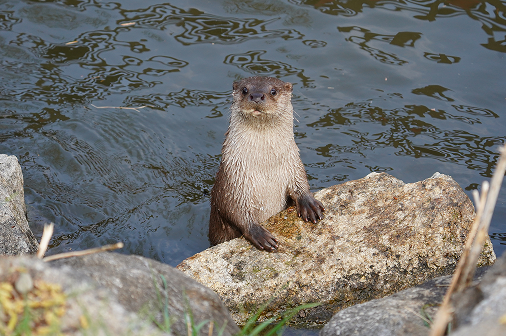
▲ Eurasian Otter (Class I Endangered, Natural Monument)
-
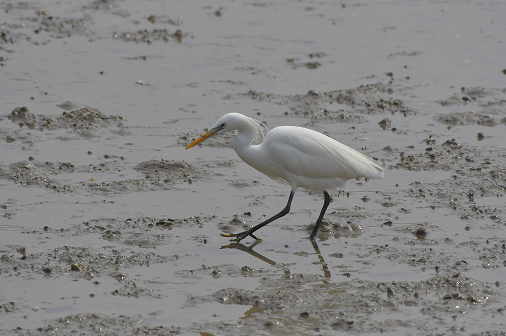
▲ Swinhoe's Egret (Class I Endangered)
-
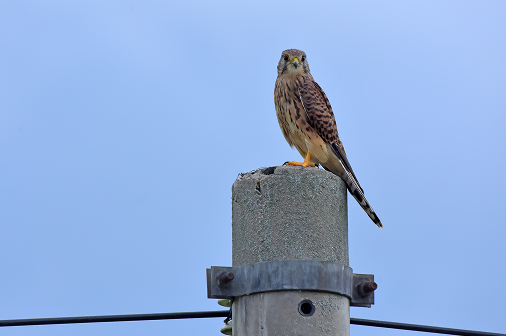
▲ Common Kestrel (Natural Monument)
Restore & Regenerate: Restoring damaged ecosystems to create positive impacts on natural capital
DS Division supports the implementation and objectives of the Kunming-Montreal Global Biodiversity Framework under the UN Convention on Biological Diversity (CBD), as well as the South Korean government's 5th National Biodiversity Strategy.
Moving beyond the conventional paradigm of simply minimizing negative environmental impacts within our semiconductor facilities, we have expanded our scope to actively conserve and restore degraded natural environments outside our sites. Accordingly, we have recently launched various ecosystem conservation and restoration initiatives.
Our business sites in South Korea, which have the highest concentration of our production lines, have launched a public-private collaborative environment restoration project since 2025, in partnership with the Ministry of Climate, Energy and Environment. This initiative focuses on restoring the riparian ecosystems upstream of Paldang Lake and Daecheong Lake, our primary industrial water withdrawal sources, aiming to conserve over 400,000 m² of ecosystems annually. In China, SCS site in Xi'an partnered with the Shanxi Provincial Government in 2024 to establish the 600,000 m² Samsung Public Welfare Forest over a three-year period. Furthermore, our business sites in South Korea currently maintain a total of 1.34 million m² of green spaces, forests, and wetlands within their premises, enhancing their role as a vital ecological corridor.
Transform: Transitioning to conservation based on stakeholder cooperation
DS Division has implemented various initiatives to enhance biodiversity by collaborating with a wide range of stakeholders, including the central and local governments, civil society, and experts. Furthermore, employees at our business sites in South Korea continuously implement social responsibility programs in partnership with local communities, such as ecosystem monitoring and conservation, environmental cleanup, and biodiversity awareness education.