Our Efforts to Recycle By-products from Semiconductor Manufacturing
Increasing Resource Efficiency in Manufacturing and Production
Transitioning non-recyclable waste into recyclable waste
At DS Division, we have expanded our recycling efforts by optimizing the classification standards and treatment processes for waste previously managed through incineration, neutralization, or solidification. This includes sorting mixed waste to identify recyclable materials and leveraging suitable recycling technologies and channels, resulting in a 99.3% recycling rate at our manufacturing sites in South Korea* in 2025.
- Giheung, Hwaseong, Pyeongtaek, Cheonan, and Onyang sites
Previously, waste PVC piping was disposed of through incineration. We have since transitioned to an efficient recycling system by separating and sorting raw materials from the PVC waste, and by partnering with specialized recycling companies. As a result, incineration-related emissions were reduced by approximately 36%.
Creating more value with resource circularity
Recycling in other industries
At DS Division, we continuously advance our circular economy strategy by converting external industrial waste into high-value resources through high-purity refining and material conversion technologies. As a key example, we recover waste wafer trays generated during semiconductor manufacturing and, in collaboration with the DX Division's Circular Economy Lab, reprocess them into recycled plastics, which are then incorporated into the side keys and volume keys1) of the Galaxy S25 series. By repurposing waste resources from semiconductor processes into DX Division products, we are further strengthening the resource circularity structure across our business units.
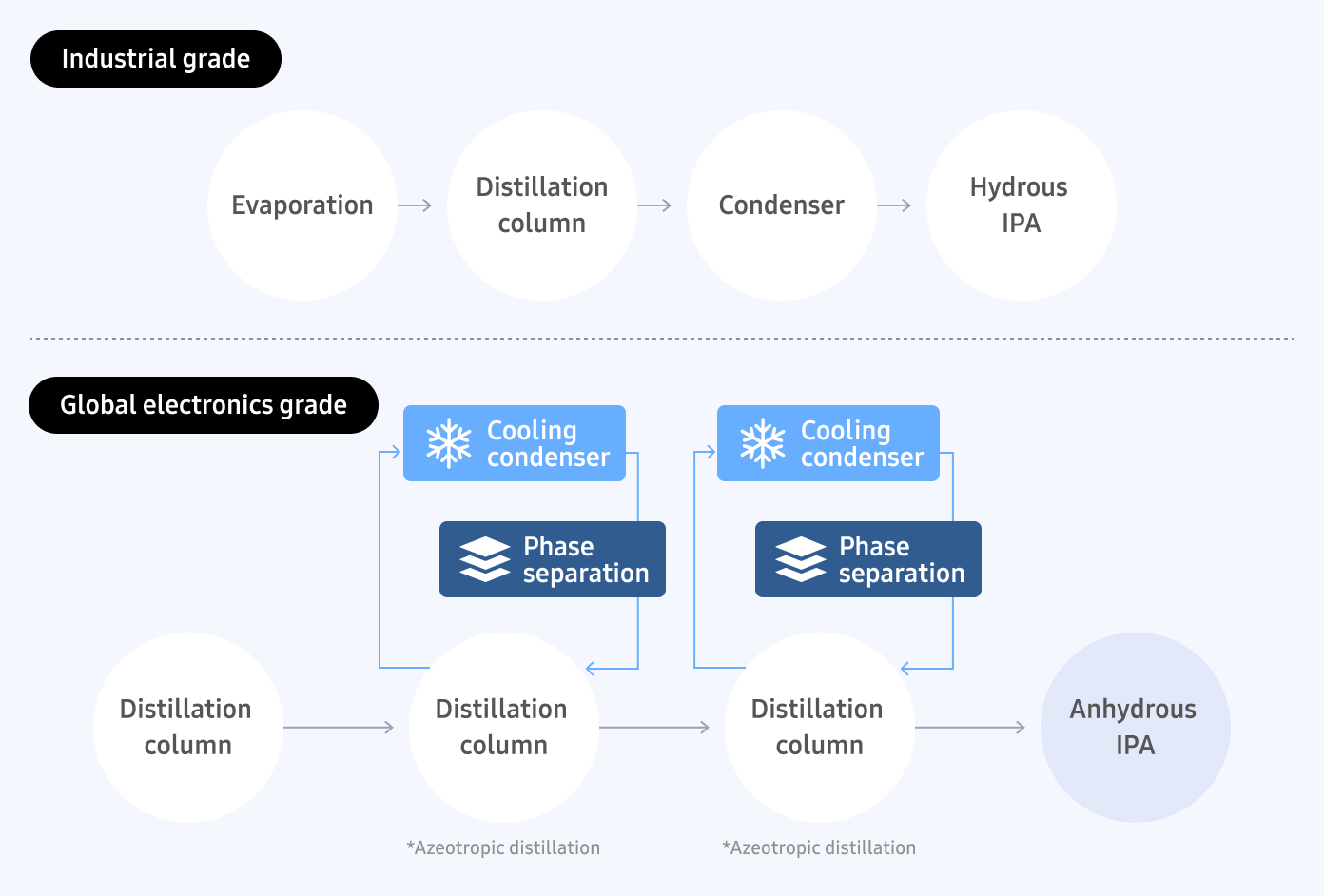
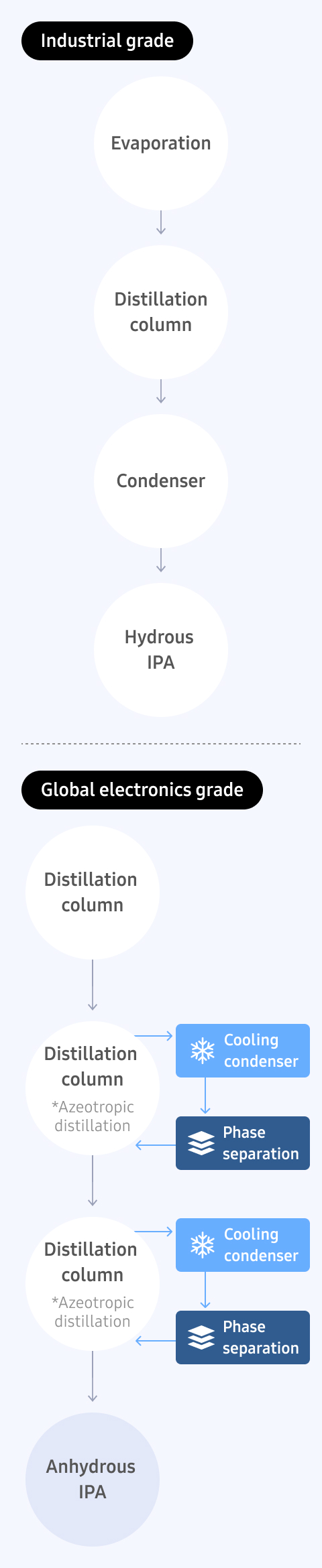
Additionally, to repurpose waste IPA2) into global electronics-grade, high-value materials, we established an anhydrous IPA recycling model using high-purity refining technology. By recycling waste IPA into both industrial and global electronics-grade materials, we have maximized the reclaimed value of manufacturing waste and strengthened our resource circularity.
- Containing 30% recycled plastic
- Isopropyl Alcohol
Reclaiming semiconductor materials as new resources
Introducing in-house recycling technology (fab materials)
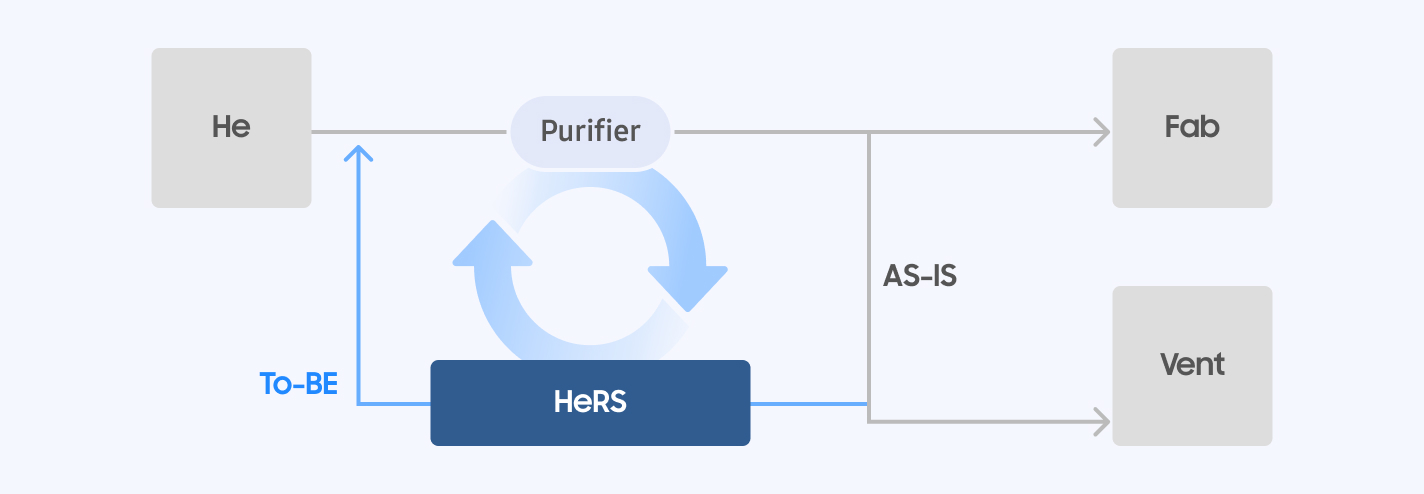
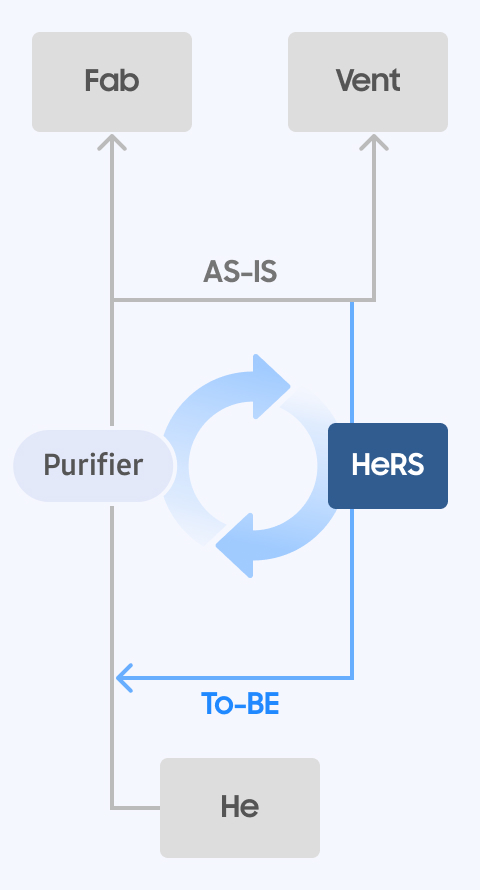
DS Division has established an in-house regeneration technology system for semiconductor process materials to partially replace new purchases and secure supply chain stability. We developed the industry's first system to capture high-purity exhaust helium, a key material, generated during the process, purify it, and reuse it. As of 2025, this system has been applied to one production line, generating an annual helium saving of approximately 4.7 tonnes. We are pursuing the expanded adoption of regeneration technology for key process materials with supply chain risks through a supply-anddemand analysis.
Introducing external recycling technology (infrastructure materials)
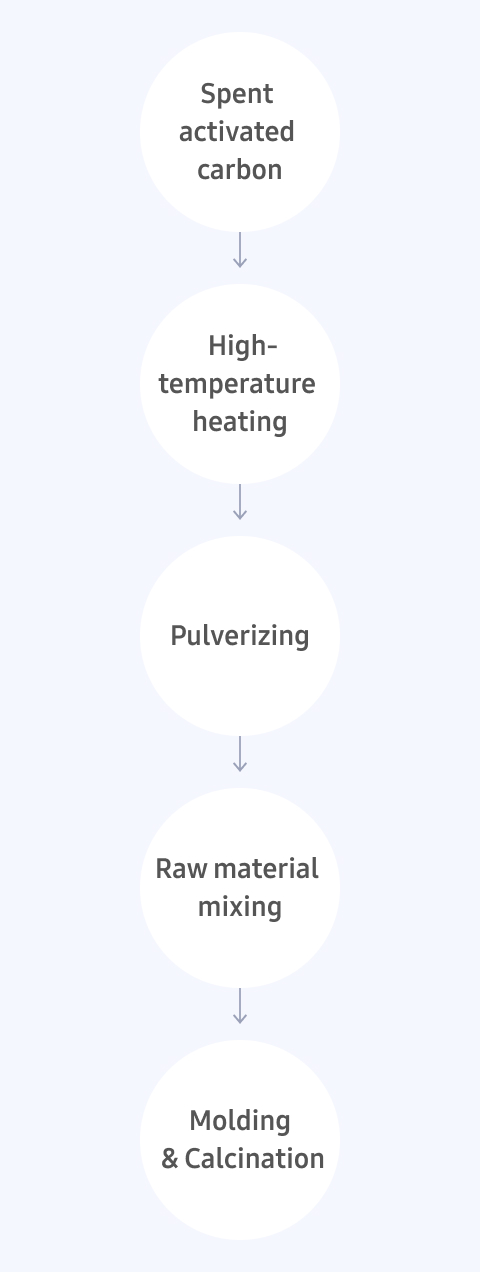
We partnered with a specialized company capable of regenerating the spent activated carbon used in our wastewater treatment and low-concentration odor removal processes. By integrating this technology on-site, we successfully diverted approximately 90% of previously incinerated activated carbon into recycling. Furthermore, we transitioned the disposal of activated carbon used for UPW production to a commercial sales model, securing additional revenue.
Regeneration Process