Reducing Direct Greenhouse Gas Emissions in DS Division
At DS Division, we are continuously driving structural innovation across our production facilities and processes to reduce Scope 1 emissions generated from the use of process gases and LNG fuel. We are strengthening our framework for reducing direct emissions by simultaneously expanding integrated process gas treatment facilities, known as Regenerative Catalytic System (RCS), developing alternative gases with low Global Warming Potential (GWP), and reducing fuel usage based on waste heat recovery.
Managing Process Gas Emissions
We are actively working on reducing process gas emissions and continue to expand related investments.
-

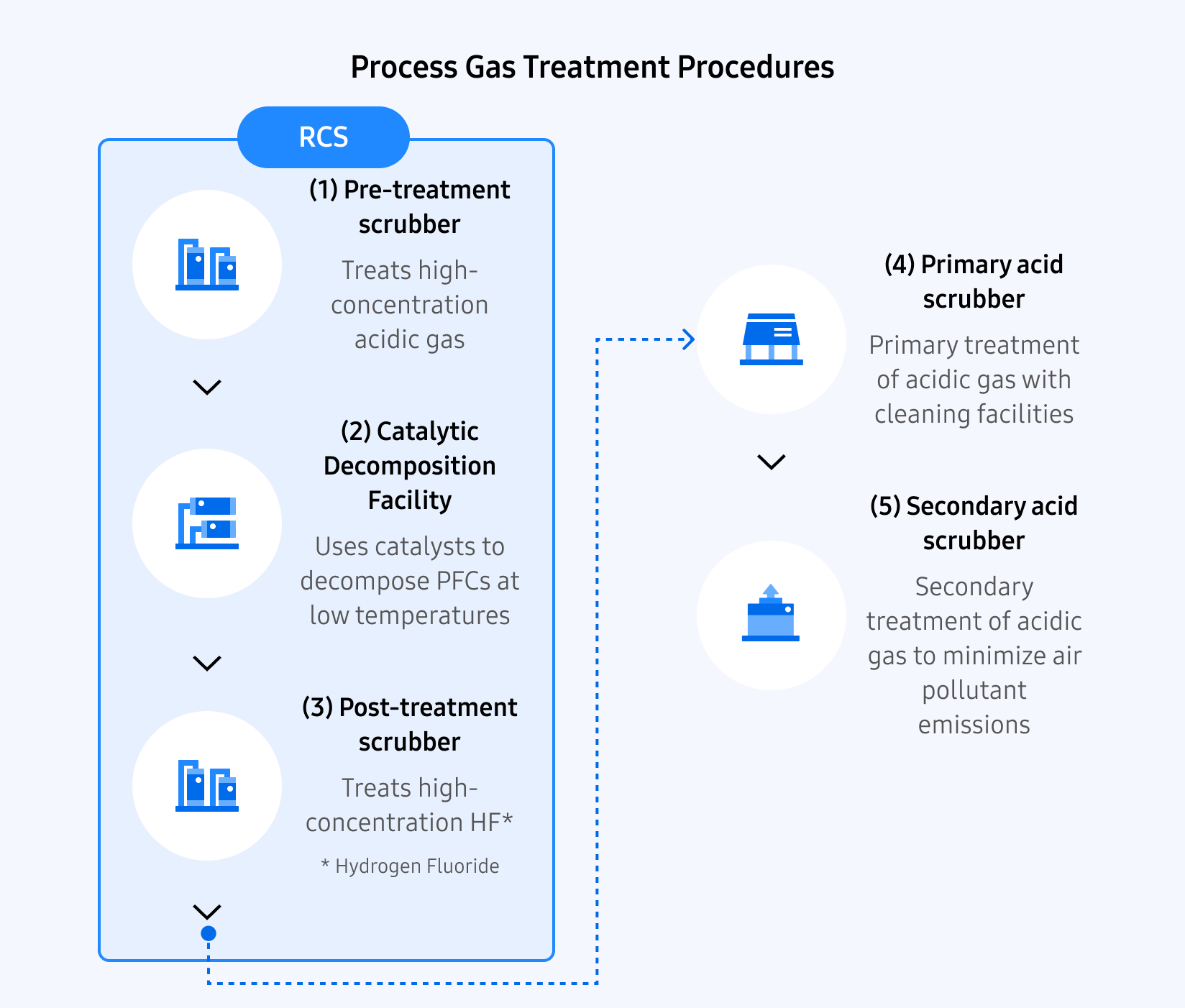
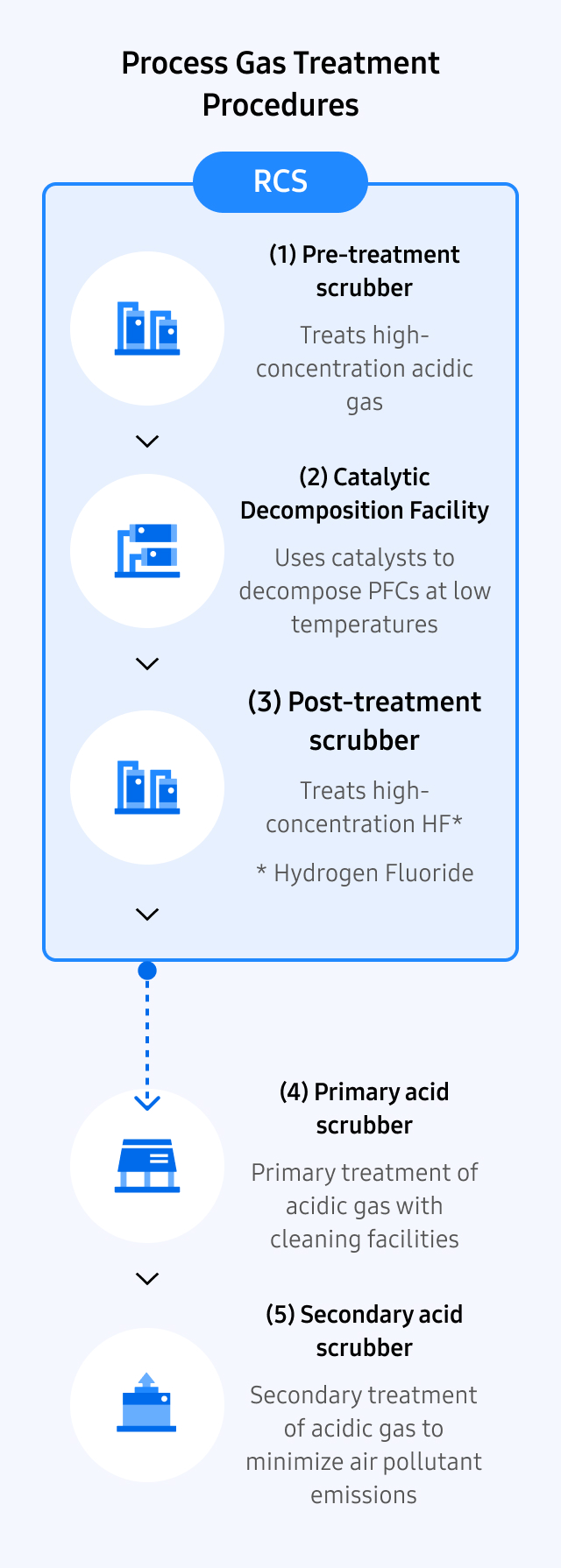
Process gas treatment
- Expand installations of large-scale process gas treatment systems (RCS)
- Develop and apply new catalysts, and increase process gas treatment efficiency: Achieved 97% PFCs* treatment efficiency through the development and on-site application of 3rd-generation catalysts
- Perfluoro Compounds
-

Developing alternative gases
- Developed alternative gases with low global warming potential and replaced PFCs in some product processes
- Developed and have applied G1 gas as an alternative to C4F8 since 2018
- Began application of G3 gas to replace CF4 in 2025
- Plan to introduce G2 gas to replace CHF3 starting in 2026 to drive further reductions
Regenerative Catalytic System (RCS)
We have developed and expanded the application of RCS, the semiconductor industry's first large-scale integrated process gas treatment facilities. In 2025, we introduced three additional RCS units across two production and research lines, bringing the total to 55 installed and operational facilities. Furthermore, we expanded the rollout of our 3rd-generation catalysts, which feature a PFCs treatment efficiency of 97%, achieving a 25% application rate across our business sites. We plan to reach 100% application by 2026. We remain committed to expanding RCS installations to existing production lines, except in cases where installation is not feasible, as well as to new production lines.
Reducing Fuel Use
We are actively working on optimizing process operations, expanding waste heat recovery, and introducing fuel-free equipment to reduce fuel consumption at our manufacturing sites. At new production lines, we are expanding the application of waste heat recovery system before discharging industrial wastewater, and utilizing waste heat from cooling water throughout the year to increase temperatures in outdoor air handling units, effectively minimizing LNG use. As a result, the waste heat utilization rate at the Giheung, Hwaseong, and Pyeongtaek sites increased from 51% to 55% in 2025. We are also looking to expand waste heat recovery to existing production lines, aiming to increase thermal energy efficiency across all our manufacturing sites. Specifically at the Pyeongtaek site, we intend to utilize thermal energy supplied from external sources, such as waste heat generated from nearby incinerators. In addition, we plan to operate non-fuel based facilities that replace existing LNG-based heat sources. These facilities use heat pumps to generate hot water from chilled water discharged from heat exchangers in certain processes.
-

Reducing LNG consumption
- Recover waste heat from facility cooling water
- Improve waste heat recovery efficiency through heat pump development
- Explore the introduction of equipment that can replace LNG-based heat sources
Transitioning to Zero-Emission Vehicles
By 2025, we converted a total of 157 vehicles to zero-emission models (electric/hydrogen), reducing direct greenhouse gas emissions.