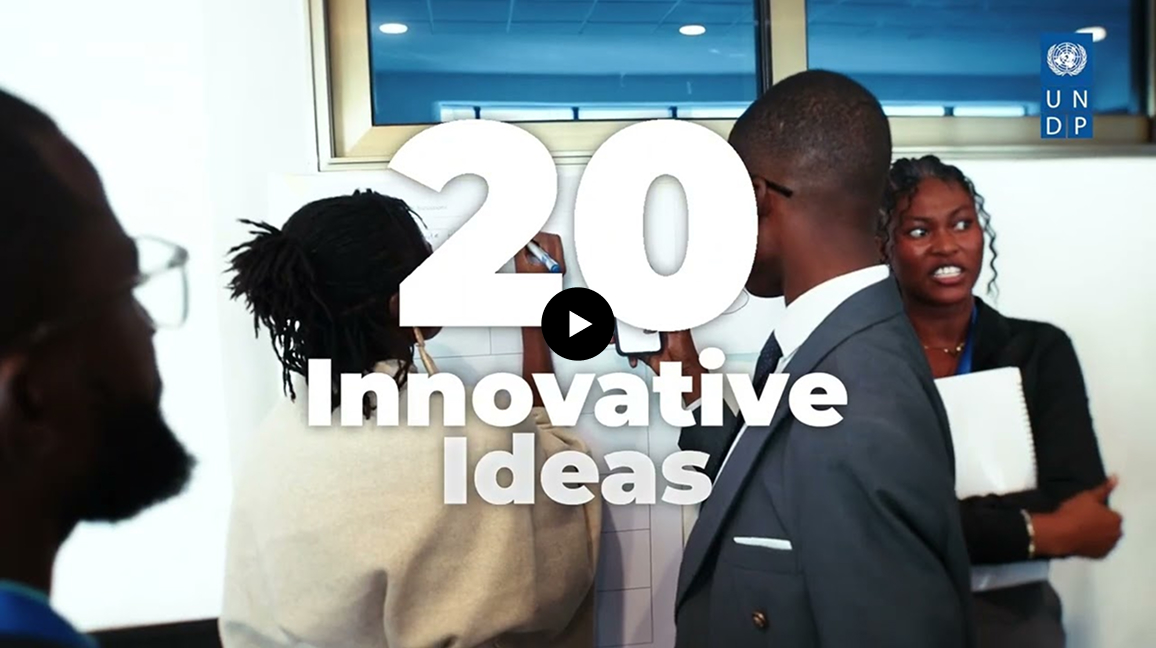
An estimated 10 billion mobile phones sit unused worldwide1). Depending on their condition, these devices could be repaired and reused, or recycled to recover materials. Yet the collection, repair and recycling systems — along with the relevant regulations and market conditions — vary widely by region. Effective circularity solutions must therefore be grounded in local realities.
Mobile device waste is also increasing across Africa, while the recycling systems needed to manage it remain limited.
To explore circularity solutions for Africa, Samsung Electronics and the United Nations Development Programme (UNDP)* launched the ‘Youth for Circularity 2030’ initiative in Sierra Leone in 20252). The initiative connects universities, innovation clubs and youth networks, supporting young people as they develop locally relevant circularity solutions for mobile devices and other electronic products.
To extend the initiative that started in Sierra Leone to young people across the continent, Samsung Electronics and UNDP held the Pan-African Mobile Circularity Hackathon as part of the 6th African Youth SDGs Summit. The event took place in Accra, Ghana, from June 23 to 25, 2026.
More than 100 young innovators from across Africa participated in the event as 20 teams. The hackathon gave them an opportunity to propose ideas related to the collection, repair and recycling of mobile devices and develop those ideas into practical circularity solutions tailored to their national and local contexts.
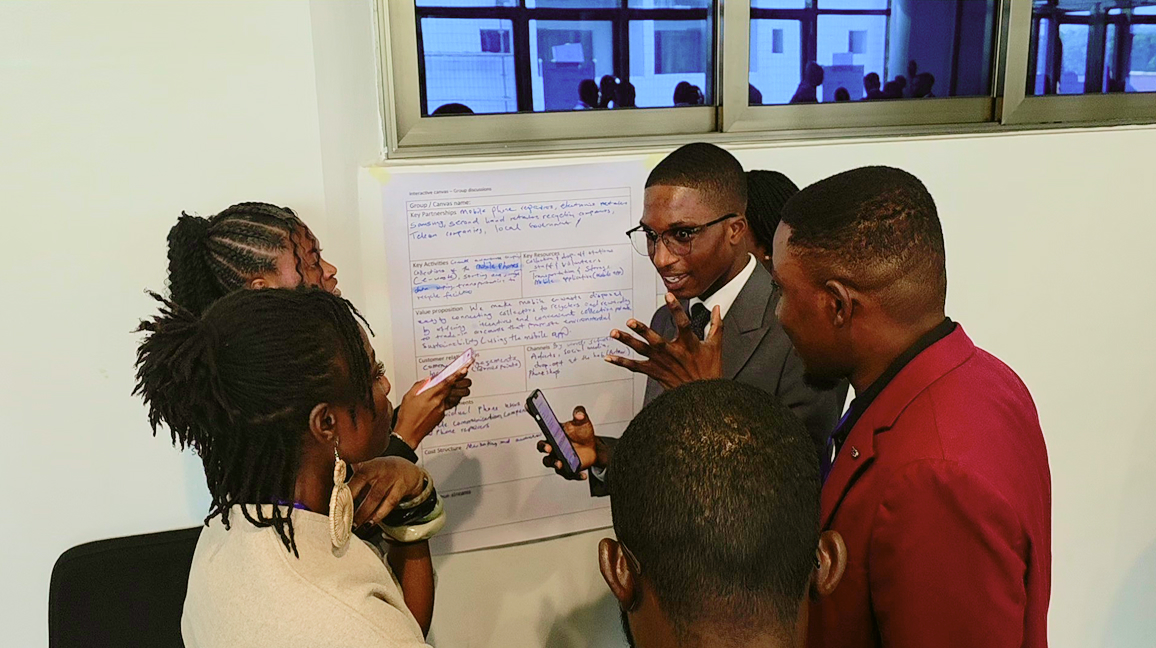 ▲ Young innovators participating in the hackathon in Ghana discuss circularity solutions for mobile devices no longer in use.
Over two days, participants refined their ideas through masterclasses and team discussions before delivering their final pitches. Andre Venter of Samsung Electronics’ Africa Regional Office, based in South Africa, led a masterclass covering the state and impact of e-waste in Africa, the importance of the circular economy and the full lifecycle of mobile devices — from design and manufacturing to post-use collection, repair and recycling. Participants also discussed the technical challenges involved, the roles of diverse stakeholders, community-based approaches to circularity and the way forward.
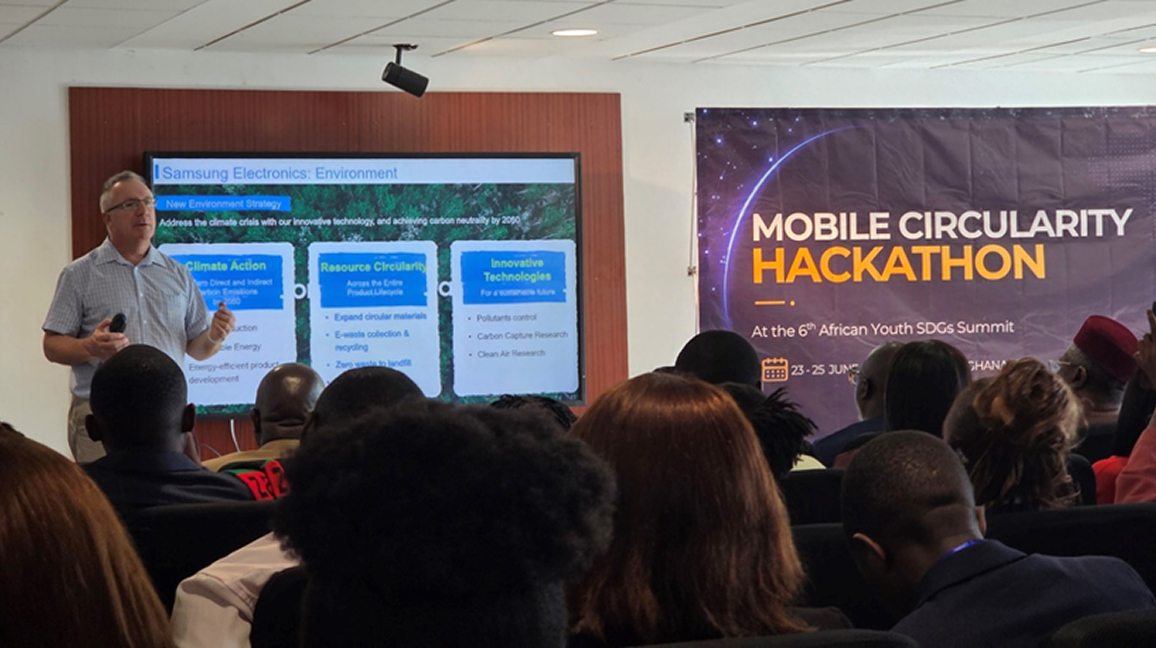 ▲ Andre Venter of Samsung Electronics’ Africa Office leads a masterclass with participants.
Following their team discussions, all 20 teams presented their final ideas to the judging panel. The panel consisted of three Samsung Electronics representatives, including Andre Venter, as well as UNDP representatives and external experts. The judges examined how well each team’s proposed solution addressed the local challenge it had identified and assessed each proposal holistically in terms of technical feasibility, sustainability, the policy context and local market conditions.
Tafara Makaza, a Generation17 alumnus and co-founder of the digital workforce platform Fixa, also served as a judge. Having previously participated in hackathons and pitched ideas himself, Makaza returned in a different role, sharing Fixa’s founding journey with the 20 teams — including how early assumptions proved wrong and prompted the company to change direction.
Of the 20 teams, three were named winners for presenting the strongest circularity solutions, evaluated against criteria including problem identification, solution effectiveness, sustainability impact, and user involvement.

The team proposed a B2B platform connecting e-waste — including ICT devices discarded by companies and institutions in Ghana — with recyclers in Ghana and abroad. By combining responsible e-waste collection with public awareness, the concept aims to help companies comply with Ghana’s Hazardous and Electronic Waste Control and Management Act (Act 917) and manage their e-waste sustainably.

The team envisioned a transparent digital marketplace connecting consumers, e-waste collectors and certified recyclers. Consumers could schedule pickups of unwanted devices or locate nearby drop-off points, while collectors could gain fairer market access by connecting directly with certified recyclers.

The team proposed an incentive-based collection model for recovering household e-waste within local communities. The concept is designed to encourage residents to return unwanted devices voluntarily, use recovered materials in commercial products and repurpose power components for localized clean-energy solutions.
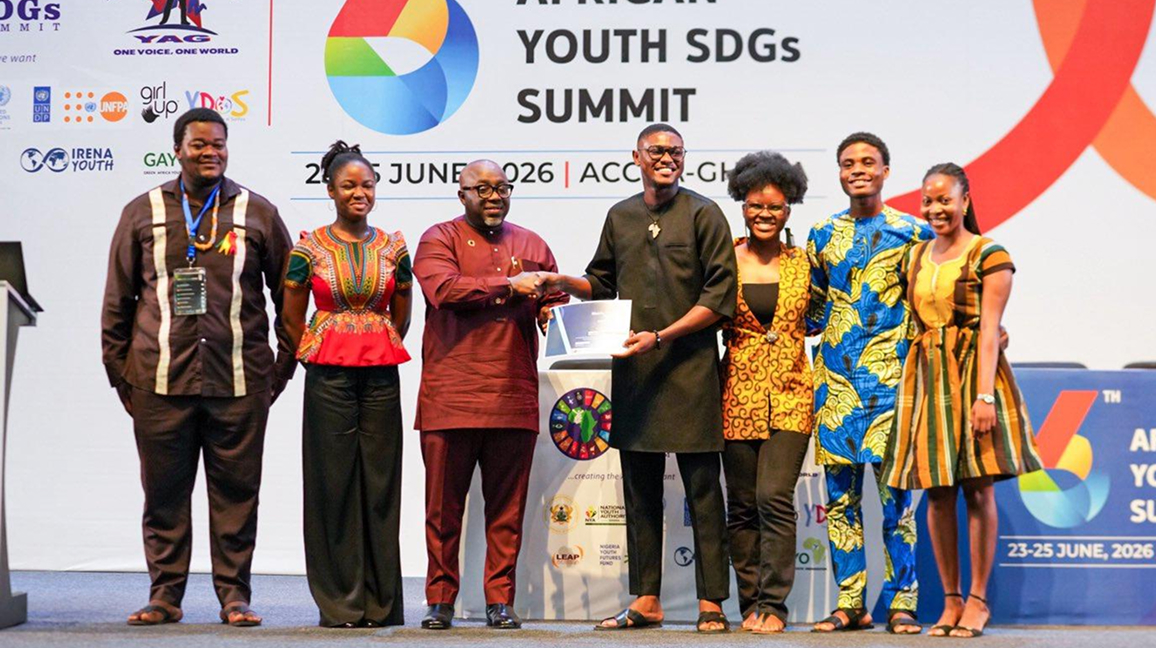 ▲ The Diamond winners pose for a group photo with the judges.
With support from UNDP’s UniPod initiative, the three selected teams will further develop their ideas and refine their operating models to reflect local regulatory frameworks, collection infrastructure and approaches to consumer participation.
Through this collaboration, Samsung Electronics and UNDP created an opportunity for young people to take the lead in examining circularity challenges in their own communities and explore new possibilities for the circular economy through technology and ideas.