Samsung Electronics hosted the 2026 Multi-Stakeholder Forum (MSF), "Accelerating Change Together for Vietnam’s Sustainable Growth," on October 14 at the Samsung R&D Center (SRV) in Hanoi, Vietnam. Around 210 key stakeholders from industry, government agencies, international organizations, and NGOs convened to discuss ways to collaborate on the country's sustainable growth.
Since starting operations in Vietnam in 1995, Samsung has continuously partnered with local industries to promote shared growth, spanning from strengthening supply chain competitiveness to nurturing future talent. The Forum provided an opportunity to reflect on shared progress alongside Vietnam’s industrial development, engage in open dialogue on pressing challenges and explore a more sustainable and inclusive path forward.
MSF 2026 opened with welcoming remarks from Soojin Kim, Head of the Corporate Sustainability Center at Samsung Electronics, followed by an opening speech from Kihong Na, President of Samsung Vietnam. In his keynote address, Juhern Kim, Country Representative of Global Green Growth Institute (GGGI) Vietnam, highlighted that AI and carbon reduction are parallel goals driven by innovation. He called for stronger support for SMEs and startups, as well as the creation of an integrated ecosystem connecting energy, technology, finance, and supply chains.
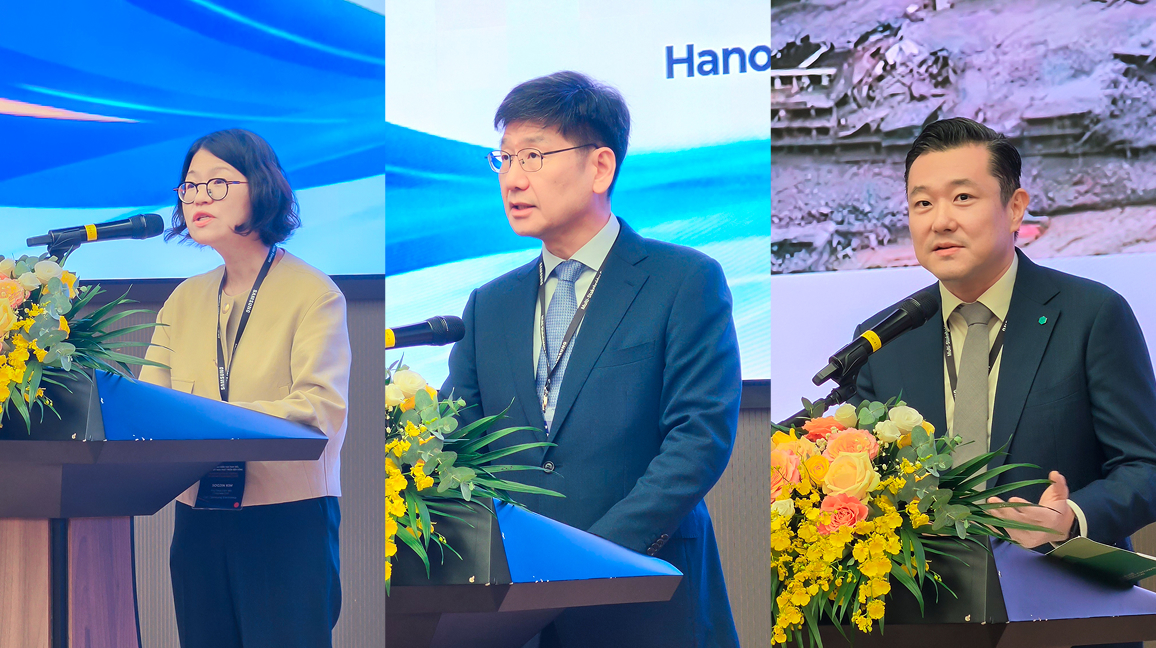
 ▲ From left: Soojin Kim, Head of the Corporate Sustainability Center at Samsung Electronics;
The first session explored Samsung’s Smart Factory program, discussing its activities to strengthen the capabilities of Vietnam's manufacturing sector and directions for further collaboration. Participants shared the view that enhancing the competitiveness of the components industry can drive sustainable growth across the broader industry.
Through this program, Samsung shares technical expertise to help local businesses enhance their manufacturing capabilities through smart factory transformation. Samsung consultants with extensive manufacturing experience visit production sites in person, working with each company to identify improvement opportunities and transfer practical know-how. This support enables local businesses to improve productivity, quality, and operational efficiency while building a stronger foundation for sustainable business practices and growth.
Jiho Cha, Head of Samsung Vietnam Procurement Center, introduced Samsung’s support initiatives and their direction in strengthening the competitiveness of Vietnam’s components industry, focusing on the Smart Factory program.
"The final goal of the Smart Factory program is to help the local workforce operate systems, resolve issues faster, and drive continuous self-improvement across the organization," Cha emphasized.
The session continued with presentations from two local participants of the Smart Factory program: Dang Quang Khoi, CEO of An Lap, and Nguyen Ngoc Diep, Vice President of Vina Technology. Sharing their stories in person, they presented their firsthand experiences and achievements through the program, detailing how the system optimized production lines and enhanced productivity and quality. An Lap also highlighted environmental management and workplace safety improvements, stating, “The Smart Factory program helped us systematize chemical management and improve workplace safety, strengthening our capability to manage risk factors independently."
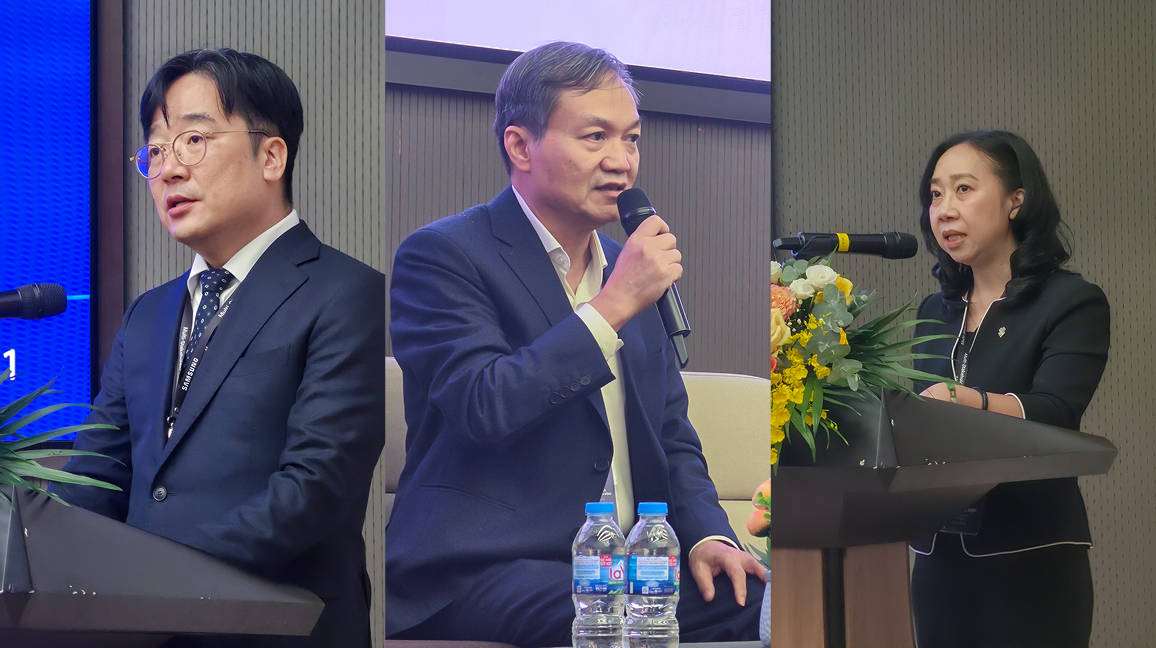
 ▲ From left: Jiho Cha, Head of Vietnam Procurement Center at Samsung Vietnam; Dang Quang Khoi, CEO of An Lap;
The second session focused on building Vietnam’s clean energy ecosystem. In particular, it addressed expanding the adoption of renewable energy, a key pillar of clean energy, and the collaboration required to support this transition. Opening the session, Nguyen Minh Anh, Chief of Staff and Strategic Initiatives Leader at the Asia Clean Energy Coalition (ACEC), drew on her experience in local policy engagement to provide an overview of Vietnam’s renewable energy landscape and key policy milestones in industrial decarbonization. She detailed the regulatory framework, operating models, and case studies for Direct Power Purchase Agreements (DPPAs), emphasizing them as an effective option for businesses to procure reliable clean energy.
Next, Gyungcheol Shin of Samsung Electronics’ Partner Collaboration Center took the stage to present "Samsung’s Renewable Energy Transition Support Model for Supply Chains." Grounded in Samsung's first DPPA implementation in Vietnam, he introduced plans for a "Joint DPPA Purchasing Model" designed to help suppliers adopt renewable energy. The presentation outlined a phased roadmap spanning from supplier training and strategy formulation to contract conclusion, explaining the advantages for suppliers, including carbon reduction and lower renewable energy procurement costs.
The second session concluded with a panel discussion bringing together experts from key sectors of the clean energy ecosystem to share in-depth insights. The panelists discussed the distinct roles of corporate energy consumers, technical advisors, renewable energy generators, and power system operators in advancing the industrial renewable energy transition. They also explored a broad range of collaboration opportunities to expand renewable energy use in Vietnam.
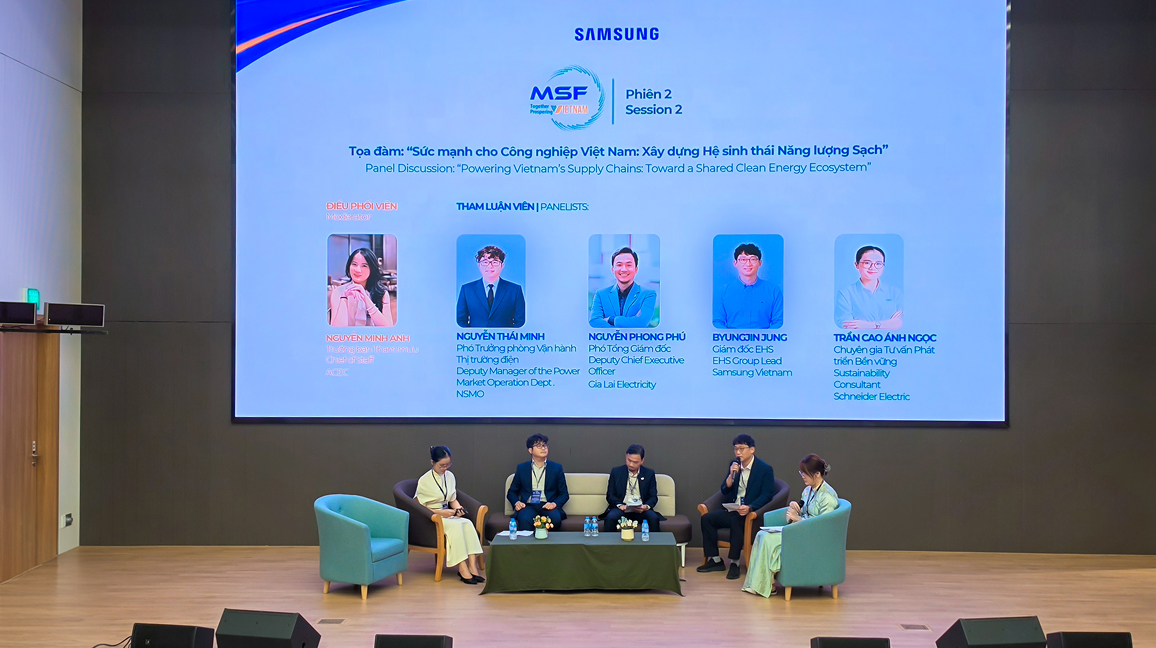 ▲ From left: Tran Cao Anh Ngoc, Sustainability Consultant at Schneider Electric; Nguyen Thai Minh,
Session 3 began with an overview of Samsung Electronics’ CSR activities in Vietnam, followed by an introduction to the Vietnamese youth teams selected for RE:ACT, a youth education program that Samsung Electronics runs in partnership with the United Nations Development Programme (UNDP). Samsung Electronics has continued to work with UNDP to help Galaxy users take action toward the Sustainable Development Goals (SDGs) through the Samsung Global Goals app and to run Generation17, a program that supports young leaders worldwide.
This year in Vietnam, Samsung Electronics and UNDP are jointly running the RE:ACT program. Now in the experimentation and development phase, the selected teams will receive technical support and mentoring to validate and refine their solutions in real-world settings through UNDP Living Labs.
The panel discussion that followed examined the challenges young people face when putting their ideas into practice and the support they need. Participants also discussed practical ways to provide support across the broader ecosystem, including expanding opportunities to test and validate prototypes with real users.
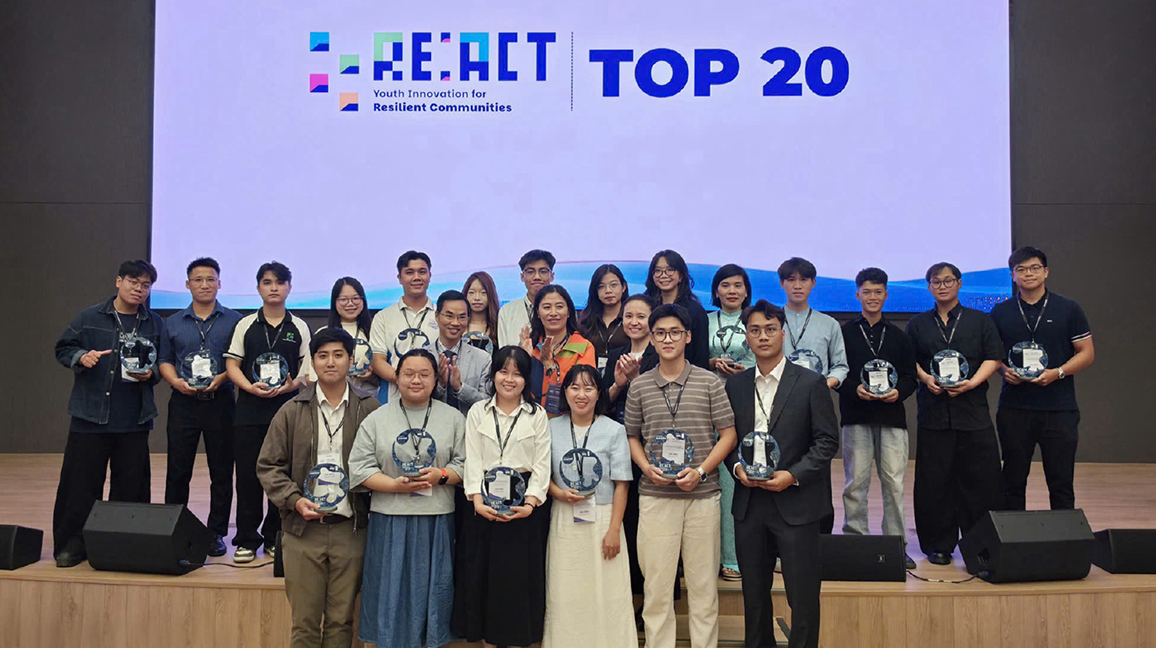 ▲ Vietnamese youth-led innovation ventures selected for RE:ACT Programme
The final session featured a panel discussion on what is needed to scale the practices highlighted in earlier sessions beyond Samsung’s supply chain and across Vietnam’s industrial sector. Moderated by the Global Green Growth Institute (GGGI), the panel brought together the Vietnam Business Council for Sustainable Development (VBCSD) under the Vietnam Chamber of Commerce and Industry (VCCI); Techcombank; FiinGroup, a leader in green bond issuance and ESG credit ratings; and VEEP, an energy efficiency solutions startup. Together, they offered a broad range of perspectives from government, finance, and small and medium-sized enterprises.
The discussion began by examining the structural barriers and practical challenges of the green transition. Panelists shared specific experiences and examples and discussed ways to overcome these obstacles. In particular, they agreed on the need for wider adoption of successful models, such as Samsung Electronics’ Smart Factory program and joint DPPA procurement, across Vietnamese industry.
As the session drew to a close, "market signals," "incentives," and "global standards" were identified as key themes. The discussion concluded by emphasizing that Samsung Electronics’ application of global standards across its supply chain is itself a catalyst for suppliers’ expansion into global markets.
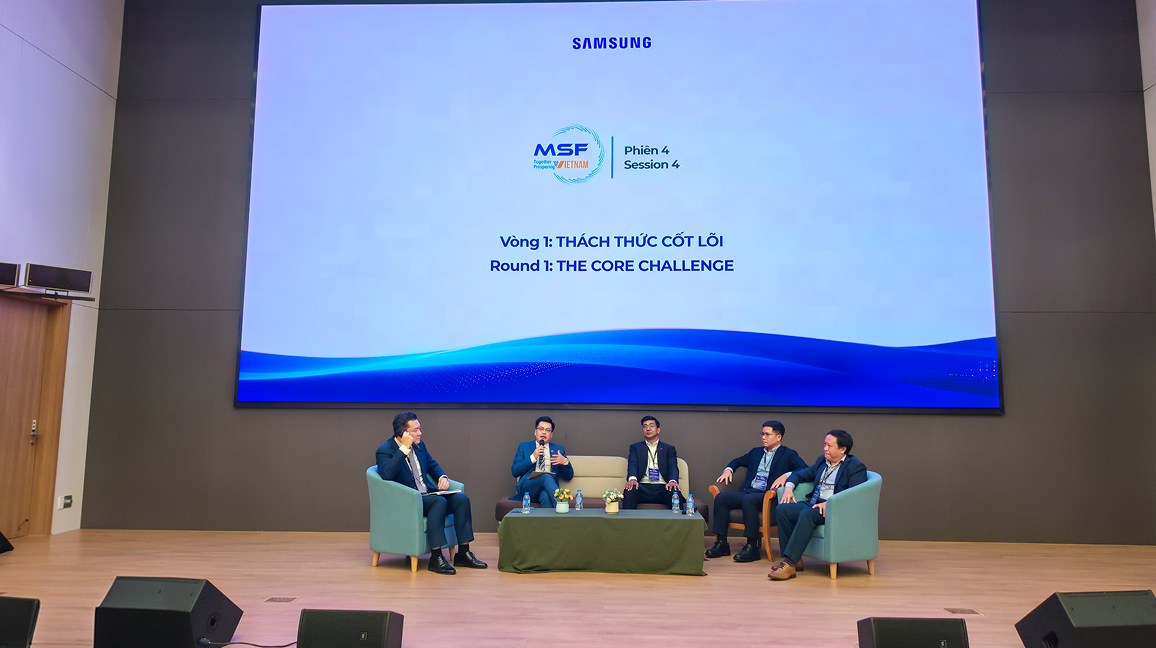 ▲ From left: Juhern Kim, Country Representative of GGGI Vietnam; Nguyễn Tiến Huy, Secretary General of VBCSD - VCCI;
This Forum brought together diverse stakeholders from local communities and the industrial ecosystem, reaffirming a shared vision for sustainable growth and stronger collaboration in Vietnam.
The event highlighted initiatives contributing to components industry competitiveness through the Smart Factory program, advancing supply chain decarbonization through support for suppliers, and fostering youth talent and sustainable tech capabilities through the Samsung Electronics–UNDP partnership. Across the sessions, participants built a shared understanding that aligning their respective efforts is essential to creating an enduring virtuous cycle of sustainable change.
Samsung Electronics will continue to work closely with a broad range of stakeholders including the Vietnamese government and public sectors, international organizations, and supply chain partners, as well as identify and scale innovative collaboration models that enable everyone to participate and take action.
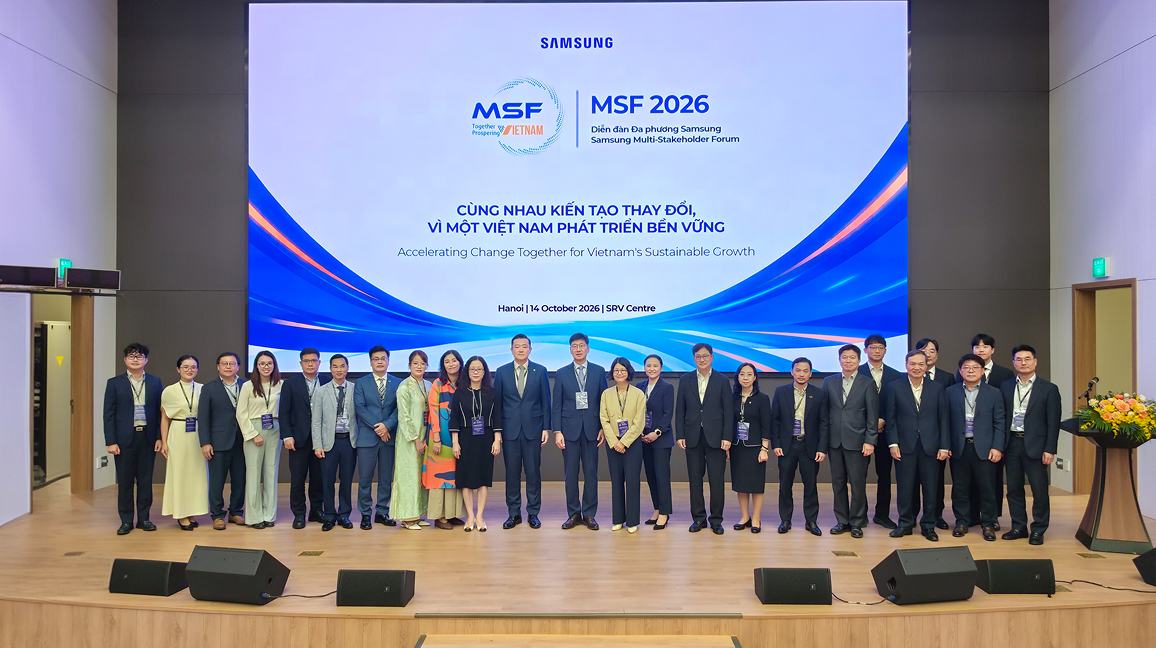 ▲ Multi-Stakeholder Forum 2026 held in Vietnam



