



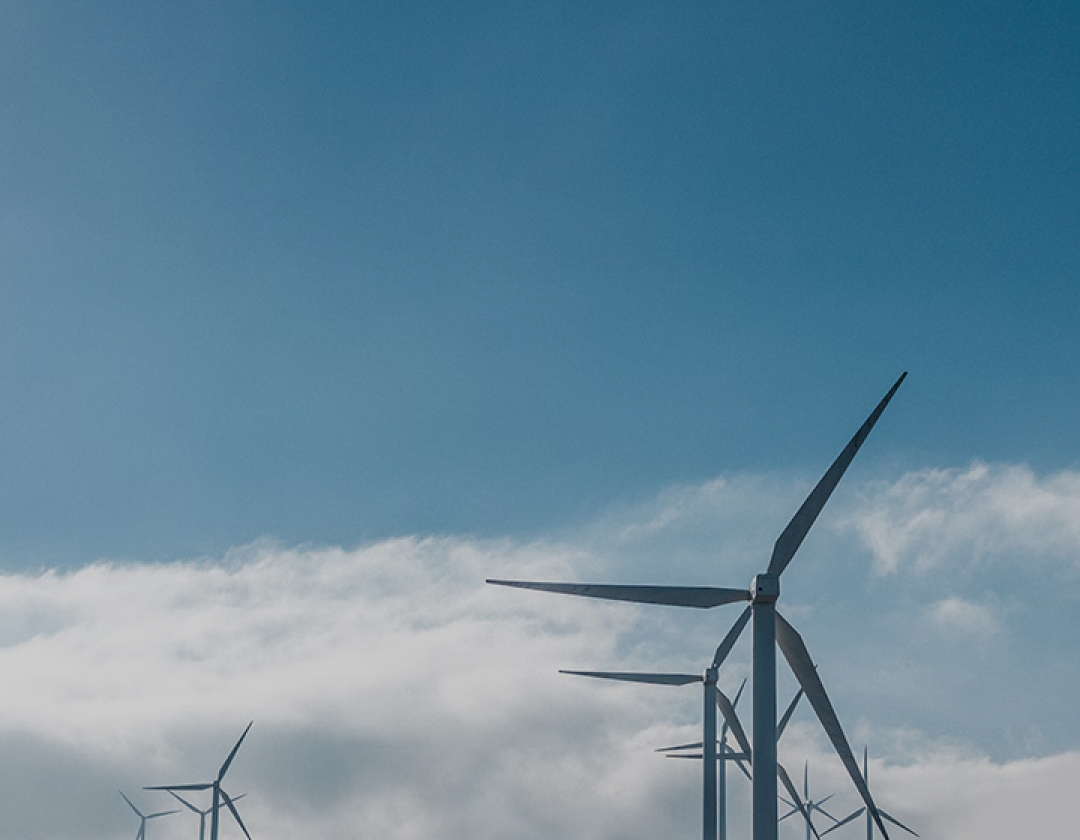
Climate
Action
Action
Pursuing net zero carbon emissions as one of the world's
largest ICT manufacturer
When Samsung Electronics acts, the effects are felt across the industry
2025 - Achieved Platinum grade* for Zero Waste to Landfill validation across all our global manufacturing sites. *UL Solutions issues Zero Waste to Landfill designations based on a facility's waste diversion rate: Platinum(100%), Gold(95-99%), Silver(90-94%). / 2030 - Aim to replenish 100% of water consumed by DX Division. Aim to reduce DS Division. * Korean manufacturing sites / 2040 - Remove pollutants generated during the semiconductor production process to 'natural state' levels* with minimal environmental impact prior to discharge (DS Division). *Treating effluent to the level of upper stream water and emissions to clean air quality meeting the national standards
Progress in 2025
- Continued to drive direct greenhouse gas emissions reductions through the expansion of high-efficiency Regenerative Catalytic System (RCS), the development and utilization of alternative gases with low global warming potential, and the recovery of waste heat
- Consumed 10,886 GWh of renewable energy globally, reaching a transition rate of 32.5% (DX 94.8%, DS 26.2%)
- Achieved transition to 100% renewable energy in the U.S., Europe, China, Vietnam, India, Brazil, and Mexico manufacturing sites
- Signed new Power Purchase Agreements (PPAs) at the Gwangju manufacturing site and expanded the procurement of renewable power at global manufacturing sites in Vietnam, India, Türkiye, the U.S., and China
- Improved product energy efficiency by 34.4%2) by applying high energy efficiency technology to leading models of seven major product categories3)
- DX∙DS Divisions
- Compared to the equivalent range of performance and specification of models from 2019
- Major product categories (2025 models): Refrigerator (RT34DG5A4DSLHL), Air Conditioner (AC052FCADKF/TL), Washer (WD90F25AHT), TV (KQ75QNF990FXKR), Monitor (LS49DG952SKXKR), PC (NP960XJG), Smartphone (SM-S938)

Circular
Economy
Economy
Increasing resource circularity
from raw material to disposal
Striving for a circular economy
2022 - In 2022, Circular Economy Lab was established to research material recycling technologies / 2030 - Aim to apply recycled plastic¹) to 50%²) of plastic parts³) in DX products, Plan to expand e-waste collection system to all global sales regions and achieve a cumulative total of 10 million tonnes collected⁴) / 2050 - Aim to apply recycled plastic¹) to 100%²) of plastic parts³) in DX products, plan to collect 25 million tonnes⁴) of e-waste cumulatively
Progress in 2025
- Used 220,444 tonnes of plastic with recycled materials achieving a utilization rate of 33.7%
- Collected 636,231 tonnes of e-waste as of 2025 (Cumulative amount from 2009 to 2025: 7.54 million tonnes)
- Circular Economy Lab: Established the Circular Battery Supply Chain by extracting minerals from waste batteries for use in new product manufacturing, and developed r-HIPS material by recycling waste Styrofoam collected during product installation
- Ratio of recycled materials varies by plastic parts
- Percentage of parts containing recycled materials out of the total amount of parts
- Plastic parts developed by Samsung
- From 2009

Clean Tech
Innovation
Innovation
Managing carbon
emissions and
reducing
particulate matter
Aiming for open collaboration with and support of communities, startups, and suppliers
Support partner companies to achieve their carbon reduction targets and to invest in environmental resources through our ESG funds / 2030 - Develop carbon capture technology for semiconductor business sites. Expand the use of particulate matter reduction technology * Korean business sites, suppliers, partner companies, etc. / After 2030 - Apply carbon capture technology to semiconductor manufacturing facilities (Contributing to 2050 net zero)
Progress in 2025
- Operating the Air Science Research Center (ASRC), established by integrating SAIT (Samsung Advanced Institute of Technology)’s Carbon Capture Research Institute and Particulate Matter Research Institute
- Confirmed an approximately 98% particulate matter removal efficiency in a real-world setting through pilot testing of the ShareAIR (Share the Clean Air) project

Sustainabilty in
Operations
Operations
Managing our
environmental
impact
Aiming to treat water and air pollutants to natural state levels and to meticulously manage and recycle waste and chemicals
2025 - Achieved Platinum grade* for Zero Waste to Landfill validation across all our global manufacturing sites. *UL Solutions issues Zero Waste to Landfill designations based on a facility's waste diversion rate: Platinum(100%), Gold(95-99%), Silver(90-94%), and Certified (80% and above). Facilities that achieve diversion rate less than 90% and above 80% can still qualify for a certified landfill diversion claim / 2030 - Aim to replenish 100% of water consumed by DX Division. Aim to reduce DS Division. * Korean manufacturing sites / 2040 - Remove pollutants generated during the semiconductor production process to 'natural state' levels* with minimal environmental impact prior to discharge (DS Division). *Treating effluent to the level of upper stream water and emissions to clean air quality meeting the national standards
Progress in 2025
- Achieved Platinum grade for Zero Waste to Landfill validation at all our manufacturing sites1) globally
- Expanded the AWS (Alliance for Water Stewardship) Platinum certification to global manufacturing sites in China and Vietnam2), following South Korea3) (as of March 2026)
- DX Division implemented a total of 42 water replenishment projects within and outside South Korea, achieving a 67.2% global water replenishment rate
- Issued by UL Solutions. Validation covered 22 sites for DX Division; an integrated validation was conducted on 10 sites for DS Division, including the Samsung Advanced Institute of Technology.
- SCS in China, and SEV, SEVT, SEHC in Vietnam
- Suwon, Gumi, Gwangju, Giheung·Hwaseong, Pyeongtaek, Cheonan∙Onyang sites