SIM card is not detected on your Samsung Galaxy device

If calls and mobile network connections suddenly appear to stop working on your Galaxy device, the SIM card may not be recognized properly. This can stem from temporary software errors, a damaged or improperly inserted SIM card, or carrier-related settings. While most issues with your SIM card will need to be resolved by your carrier, here are some troubleshooting steps to check the SIM card status and potentially restore connectivity on your Galaxy device before contacting them.
SIM card removed from a Galaxy S26 Ultra and placed on a table.

SIM card is not detected on your Samsung Galaxy device

Note
  • If you are attempting to activate your phone with an eSIM during initial setup, please contact your carrier. An “Emergency calls only” message will be displayed at the top of the status bar if there isn't an active eSIM or active SIM inserted, or if the SIM card is damaged.
  • Menu names, settings, and screen layouts may vary depending on the model and software version.
1

Check the SIM card status.

If calls or mobile network connections are unavailable, first check whether the SIM card is recognized properly on your Galaxy device.

  1. Open Settings, then tap About phone.
  2. Tap Status information.
  3. Tap SIM card status.
    Status information screen with the SIM card status option highlighted.
  4. Tap Network and check whether the mobile carrier name appears.
    SIM card status screen showing Not available under Network.
2

Check for carrier SIM protection services.

Some mobile carriers provide SIM protection services that prevent SIM cards from being activated on new devices.

  • Contact your mobile carrier to check whether the SIM protection service is enabled. 
  • If enabled, disable the service through the carrier before using the SIM card on a new device.
3

Reset mobile network settings.

Incorrect mobile network settings may prevent the SIM card from connecting properly to the carrier network.

  1. Open Settings > Tap General management.
  2. Tap Reset.
  3. Tap Reset mobile network settings.
    Reset screen with the Reset mobile network settings option highlighted.
  4. Tap Reset settings.
  5. Review the caution message on the screen, then tap Reset to confirm.
    Caution message requesting confirmation to Reset the settings.
Note
Resetting mobile network settings removes saved mobile network configuration information and reconnects the device to the carrier network using default settings.
4

Restart the device.

Restart using the power menu

Temporary system errors may prevent the SIM card from being recognized properly.

  1. Swipe down from the top right of the screen to open the Quick settings panel.
  2. Tap the Power off icon.
  3. Tap Restart.
    Power menu showing the Restart option.


Restart using the buttons

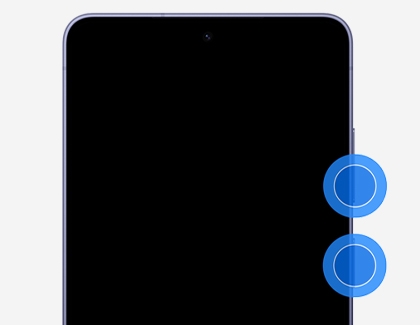
If touch input does not work properly, use the buttons to restart your device.

Press and hold the Side key and Volume down key at the same time for more than 7 seconds until the device restarts.

Image showing a phone with the Side key and Volume down key being pressed simultaneously.

5

Replace or reinsert the SIM card.

If the issue continues after restarting the device, the SIM card itself may be damaged, worn out, or improperly inserted.

Try inserting another SIM card to check whether the device works normally.

  1. Insert the SIM eject pin into the tray hole.
    Inserting the SIM eject pin into the tray hole.
    Important: Always insert the eject pin straight into the tray hole.
  2. Pull out the SIM tray completely. Do not bend or force the SIM tray.
    SIM tray completely out of the device.
  3. Place the Nano-SIM card in the tray with the gold contacts facing upward. Ensure the SIM card is properly seated in the tray.
    Nano-SIM card in the tray with the gold contacts facing upward. Make sure the SIM card is properly seated in the tray.
  4. Reinsert the tray fully into the device.
    Reinserting the SIM tray into the device.
    Important:
    • Fully dry the tray before reinserting it if it becomes wet.
    • Push the tray completely into the device to help prevent liquid entry.

If you have another active line with your carrier, you can try that SIM card with your device.

Note
  • Contact your carrier store to request a SIM card replacement. 
  • Only Nano-SIM cards are supported on Galaxy devices that use physical SIM cards.
6

Clean the SIM card contacts.

Foreign material on the SIM card contacts may prevent proper recognition.

  • Do not touch the metal contacts with your hands or metal objects.
  • If the SIM card is dirty, gently wipe it with a soft, dry cloth.
  • Do not force the SIM card into the tray or insert it incorrectly.
7

Run Samsung Members Phone diagnostics.

You can use Samsung Members Phone diagnostics to check the SIM card status on your Galaxy device.

Note: Phone diagnostics is available only on Galaxy devices with the Samsung Members app installed.

  1. Open the Samsung Members app, then tap Support.
    Samsung Members app home screen with the Support option highlighted.
  2. Tap Get started. The full diagnostics scan will begin. You can stop the process and select specific items to run individual tests.
  3. Select SIM.
    Phone diagnostics list with the SIM option highlighted.
  4. Follow the on-screen instructions and check the diagnostic results.
8

Request service.

If you have verified that your SIM is working and active, your device requires service. Please visit a Samsung walk-in service center or you can schedule a repair service online.
Was this content helpful?
We're here for you

Contact Samsung Support

Contact us online through chat and get support from an expert on your computer, mobile device, or tablet. Support is also available on your mobile device through the Samsung Members App.